
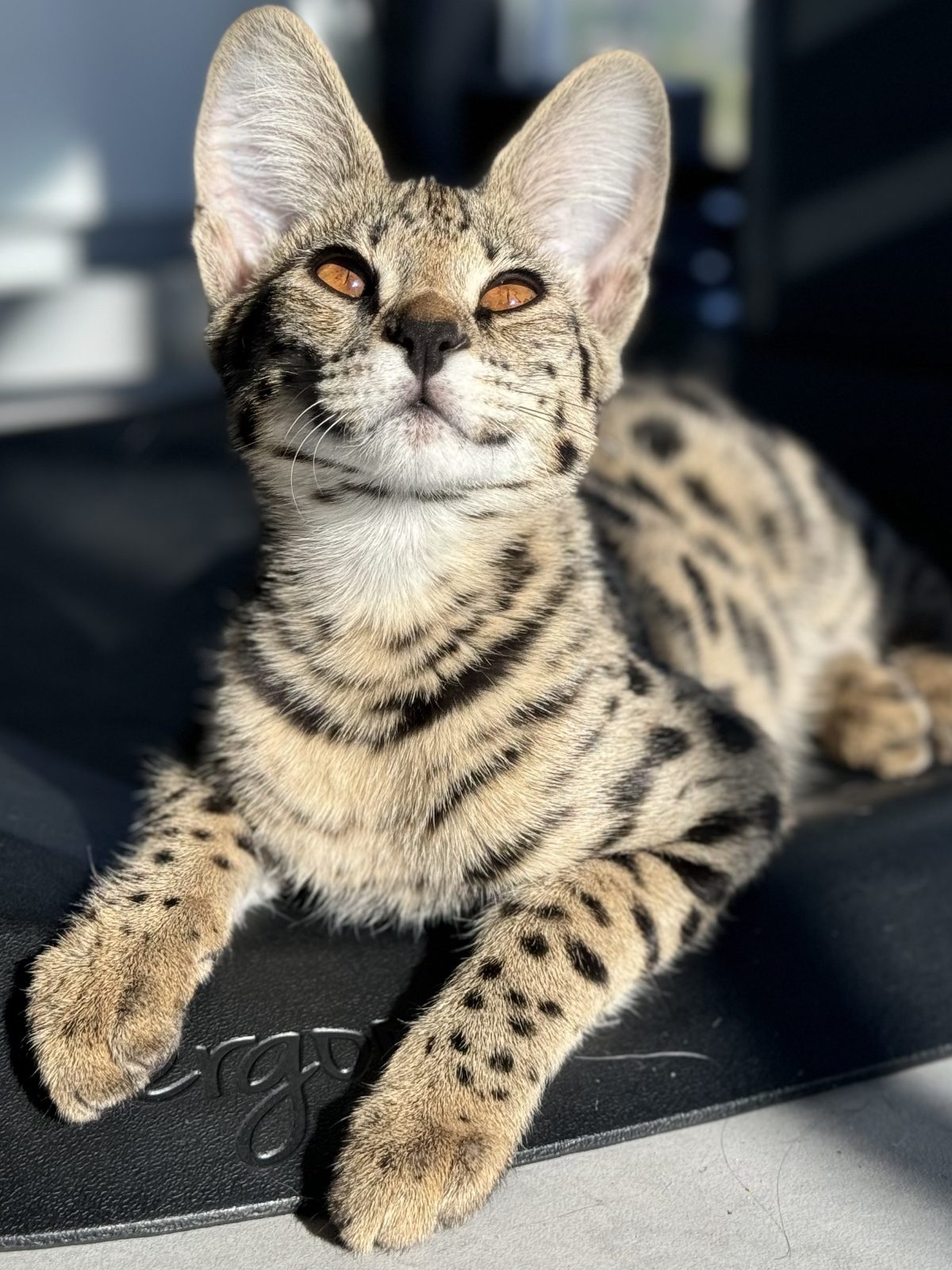
Savannah cat at home
For the Savannah-curious

New to Savannahs? Start here.

No jargon, no sales pitch. What Savannahs are actually like to live with, what they cost, where they’re legal, and how to tell if one belongs in your home before you fall for a photo.

Is a Savannah right for you?Breed basics
2-minute quiz
Is a Savannah right for you?
Eight honest questions about your home, time, and tolerance for chaos. No email required.
Take the quiz
Breed basics
What living with one is really like
Temperament, energy level, the dog-like loyalty, the counter-surfing, the full picture.
Read the guide
Generations
F1 to F7, explained
What the F-numbers mean and how generation changes size, temperament, cost, and legality.
See the scale
Honest expectations
The parts nobody posts online
Cost, time, energy, and the real challenges, so nobody rehomes a cat they weren't ready for.
Get the truth
Check first
Is it legal where you live?
Savannahs are restricted or banned in some states and cities. Check your area before you fall in love.
Check your area
Beginner FAQ
The questions everyone asks
Kids and other pets, size, allergies, indoor life, and why litters are rare and waitlists are long.
Read the FAQ
Generations, explained

The F-number just counts generations from the serval

An F1 has a serval parent. An F2 has a serval grandparent, and so on. Lower numbers generally mean a larger, more demanding, more expensive cat, and more legal restrictions. Higher numbers live more like a confident, athletic house cat.

F1 to F2
Closest to the serval. Largest, most intense, highest cost, most restricted. Experienced homes only.
F3 to F4
Still tall and wild-looking, somewhat easier to live with. Males in these generations are typically sterile.
F5 to F7
The exotic look with the most domestic temperament. Most common first Savannah, and legal in more places.
Every cat is an individual, generation is a starting point, not a guarantee. Talk to breeders and owners here before choosing.
Savannah cat on a wall-mounted cat tree
Honest expectations

This is not a decorative cat

Energy: hours of daily play, climbing, and vertical territory. A bored Savannah redecorates.
Time: they bond hard and want in on everything. This is a 15-plus-year companion, not furniture.
Cost: kittens cost more the closer the generation is to the serval, and quality food, enrichment, and vet care add up after.
The payoff: a loyal, dog-like, brilliant companion unlike any house cat, for the right home.
Before anything else

Check that a Savannah is legal where you live

Some U.S. states ban Savannahs outright, others allow only later generations, and individual cities can be stricter than their state. It is heartbreaking to fall in love with a kitten you cannot legally bring home, so this is step one.

Laws change. Always verify with your state wildlife agency and your city or county before placing a deposit.

What to look for
Legal, all generations allowed
Restricted, only later generations (often F5 and beyond), or permits required
Banned, no Savannahs, any generation
Examples: Hawaii bans Savannahs entirely; New York State allows F5 and later but New York City bans all generations. Rules like these are exactly why you check first, and verify locally.
The 2-minute gut check

Is a Savannah right for you?

Eight questions about your space, schedule, other pets, and what you actually want from a cat. You get a straight answer, including “probably not yet,” if that’s the truth.

Question 1 of 8
How much active play can you give a cat every day?
Beginner FAQ

The questions everyone asks first

Do Savannahs get along with kids and other pets?
Well-socialized Savannahs generally do, especially when raised around them, many bond closely with dogs. Early socialization by the breeder matters enormously, which is one reason to buy from a verified, home-raising breeder.
How big do they get?
It varies by generation and individual. Early generations can be among the tallest domestic cats; later generations are closer to a large house cat, long-legged and athletic either way.
Are they hypoallergenic?
No cat truly is, Savannahs included. If allergies are a concern, spend time around adult Savannahs before committing.
Can they live indoors?
Yes, and they should. They need vertical space, enrichment, and daily play indoors; many owners add harness walks or a secure catio.
Why are litters so rare and waitlists so long?
Savannah males are typically sterile in the earliest generations, which makes breeding pairs genuinely hard to establish. Small, infrequent litters are normal, and a breeder with kittens "always available" is a red flag worth asking about.

Decided a Savannah is right for you?

Take the safe route: pick your generation, browse verified breeders, and join a waitlist, no scams, no guesswork.

1Pick your generation
2Browse verified breeders
3Join a waitlist
Browse verified breeders